A Winter Walk for Watching the Shape of the Land
A winter walk for watching the shape of the land reveals how bare branches, low light, and weather alter a familiar view, with a simple way to record it.
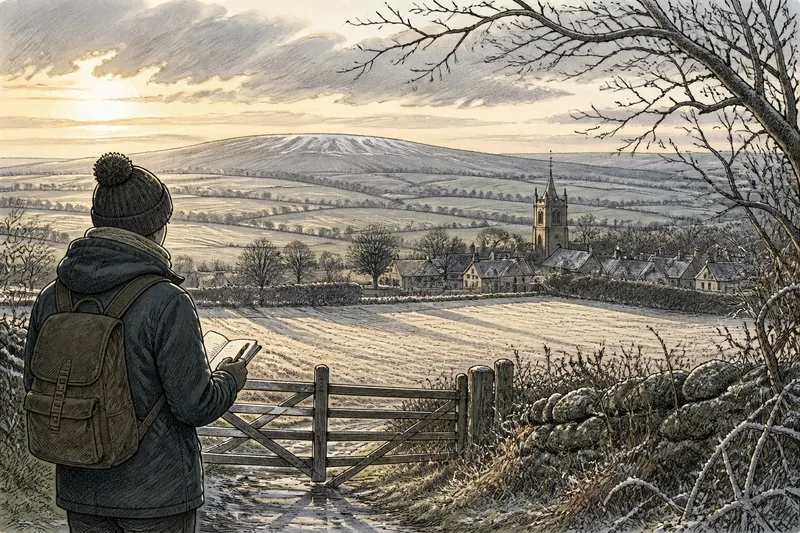
A winter walk for watching the shape of the land can turn a familiar path into a close look at how the season changes its appearance. Bare branches expose rooftops and distant slopes, while low light can pull long shadows across fields. Instead of tracing every contour, notice what winter reveals, conceals, and changes from one visit to the next.
Choose a Seasonal View
Pick a short public route with an open place to pause, such as a village-edge path looking over fields or a lane beside a broad common. Keep the route familiar so your attention can stay on the view. Check a paper map or a local authority path map beforehand, and choose a stopping place away from traffic and gateways.
Winter is not one fixed look. A clear, low sun may sharpen the silhouette of a hedge; a gray sky can soften distant hills; rain darkens soil and stone. These shifts are part of the subject, not interruptions to it.
Carry a charged phone, water, warm layers, shoes with grip, and a small notebook if you like making notes. Check daylight and the forecast, and turn back if ice, mud, wind, or poor visibility makes walking uncomfortable.
Notice Winter Light
On your first visit, watch where the light falls rather than trying to name every landform. A low sun may leave one side of a hill bright and the other in shade. Look for long shadows from trees, walls, and buildings, then notice how those shadows change the apparent shape of the ground.
Keep direct observations separate from guesses. “Dark band below the ridge” records what you see; “woodland” is an interpretation that may need another view. A few plain words in a notebook are often enough to make the next visit more revealing.
Follow Seasonal Traces
On another walk, look for changes that belong to winter weather. Puddles collect in hollows, damp earth deepens the color of a track, and frost can outline grass or leaves. Along a field edge, bare twigs may reveal a line that summer foliage hid. These details offer a seasonal view of a place without requiring you to leave the path.
Say you visit a familiar village path after rain and see a dark strip crossing a pale field. You note its position beside a shallow dip, then return on a dry, bright day and find that the strip has faded while the dip remains visible. The result is a useful distinction: wet ground changed the appearance, but the shallow fold still shapes the view.
Compare the Same Place
Return to one safe stopping point under different skies. A simple note can include the date, whether the ground is wet or frosty, the direction of the light, and one feature that looks different. If you take a photograph, stand in the same public place and use it as a memory aid rather than a substitute for looking.
- Check whether the ground is wet or dry; if dark patches appear only after rain, record them as temporary surface changes, then compare again in dry weather.
- Check whether a hedge is bare or leafy; if branches reveal a line across the field, note its shape, but if foliage still blocks the view, choose a clearer angle from the path.
- Check where shadows fall; if they cross a slope and obscure its surface, revisit when the light has shifted, or describe the shadow instead of guessing at the ground beneath it.
- Check whether frost outlines plants or stones; if it makes a small feature easier to see, record its position, but if the path is slippery, skip the stop and continue safely.
- Check how much of the distant view is visible; if haze hides the skyline, focus on nearby roofs and trees, or return in clearer conditions.
- Check whether your stopping place is clear of traffic and access points; if it is not, move to a permitted safe spot or end the observation there.
Questions for Winter Walks?
What should I bring on a winter landscape walk?
Wear warm layers and shoes suited to the path, and carry water, a charged phone, and a map or navigation tool that fits the route. A notebook and pencil can help you record what the weather and light are doing.
Can a cloudy day still show the land clearly?
Yes, though soft light may reduce contrast and haze can hide distant features. If poor visibility makes route-finding difficult, shorten the walk or use a familiar path.
How can I distinguish a shadow from a change in the ground?
Compare the same spot when the light has shifted, and look for other visible clues such as the edge of a hedge or a track. If the appearance changes with the shadow, record it as a lighting effect rather than treating it as a permanent feature.
Can I make these observations from a village path?
Yes. A permitted path with a safe place to pause can show how roofs, trees, fields, and distant slopes look in winter. Stay on public routes and avoid stopping where you could obstruct traffic or access.
Keep One Winter Note
For a later visit, choose one seasonal detail to watch: the shadow of a church tower across a field, the way frost rims a hedge, or the first clear view through bare branches. A winter walk for watching the shape of the land becomes more rewarding when you notice a specific change and write down what conditions produced it.
Keep the note modest and repeatable: where you stood, what the weather was like, and what caught your eye. That small record gives you a useful point of comparison when the same path looks different again.