How to Read a Countryside Landscape Through Its Working Details
Learn how to read a countryside landscape by comparing land uses, buildings, and signs of upkeep, so a familiar view reveals how the place works.
To read a countryside landscape, look for the signs of how people use and care for the land today. A livestock trough, a recently mown verge, a barn with working doors, or a patch of coppiced trees can tell you more about current routines than a distant view alone.
These details are clues, not a complete history. A building may have changed purpose, and a quiet field may be resting between uses. Start with what you can observe, then keep any explanation tentative unless you can check it with local information.
Notice working details
Choose features tied to an activity: gates that allow machinery through, water containers near grazing animals, stacked materials beside a farm building, or signs directing visitors away from working areas. Describe what is visible before deciding what it means. A gate is plainly wide; whether it was built for a particular vehicle is a separate question.
Look, too, for signs of upkeep. A cleared drain, a repaired fence, or a mown strip suggests recent attention, but does not reveal who did the work or how often. Avoid entering fields or approaching livestock to inspect a detail. Observe from a public path or another place where access is allowed.
Compare current uses
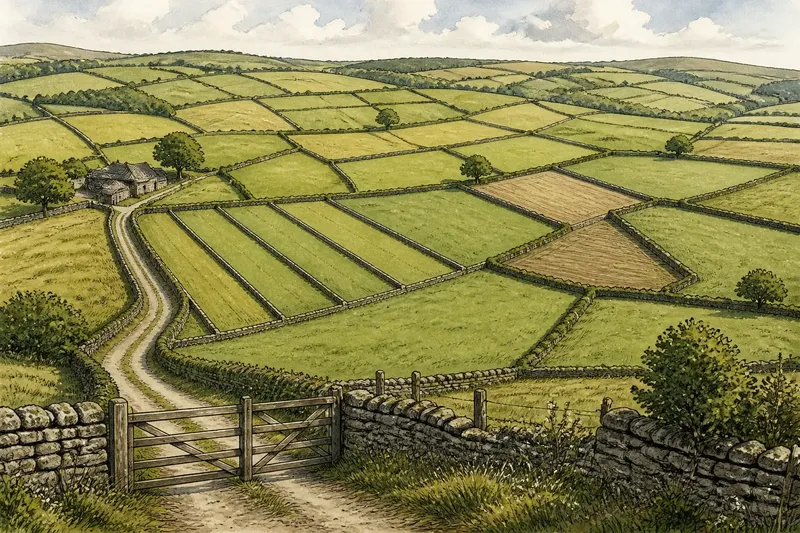
Compare nearby areas by what appears to be happening in them: grazing, crop growth, storage, recreation, or tree management. The contrast can show how a place accommodates different needs. A farmyard beside pasture, for instance, offers a visible connection between buildings and open land without proving exactly how either is used.
Seasonal change can make the same area look different. Bare ground may be part of a work cycle, while a field full of growth may be managed for a purpose that is not obvious from the path. Treat a single visit as a snapshot rather than a definitive account.
Read care and access
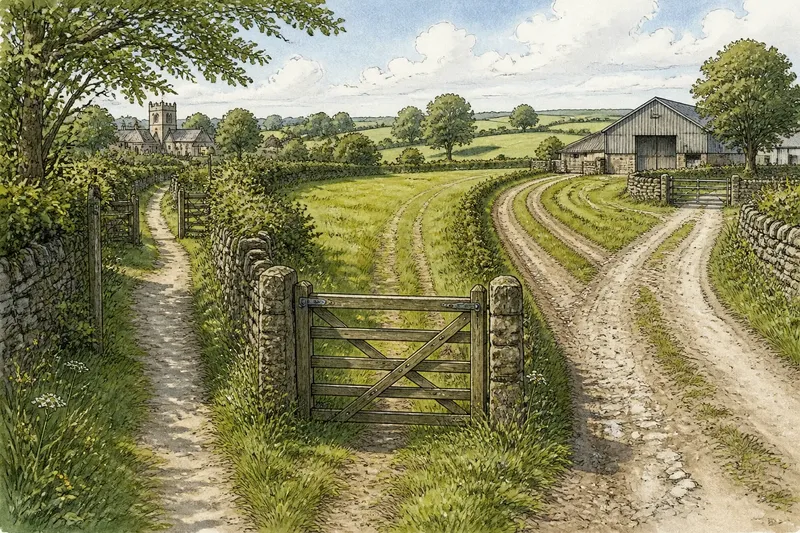
Signs, gates, and maintained surfaces help visitors understand where they may go and what to avoid. Follow posted directions, keep dogs under control where required, and leave gates as instructed. A track’s appearance alone does not establish public access; check a current local map or official access information if you are unsure.
Some features are easy to misread. A tidy strip beside a field may be kept clear for access or maintenance, but its purpose is not certain from appearance alone. Make a careful note of the feature and look for a sign, map, or local source before treating a guess as fact.
How can you read the details?
What does a maintained feature tell you?
It shows that someone has attended to it, or that a maintenance routine may be in place. It does not identify the person responsible or explain the reason without more evidence.
Can one visit reveal how land is used?
A visit can show visible activity and conditions at that moment. For a fuller picture, compare observations from different seasons or consult reliable local information.
How do you avoid misreading a building?
Describe its visible form and condition before assigning a use. Look for a sign or another clear clue, and leave the purpose open if none is available.
What should you do if access is unclear?
Do not assume a track is open because it looks well used. Check waymarks and official local access information, and choose a route clearly open to visitors if uncertainty remains.
A worked observation
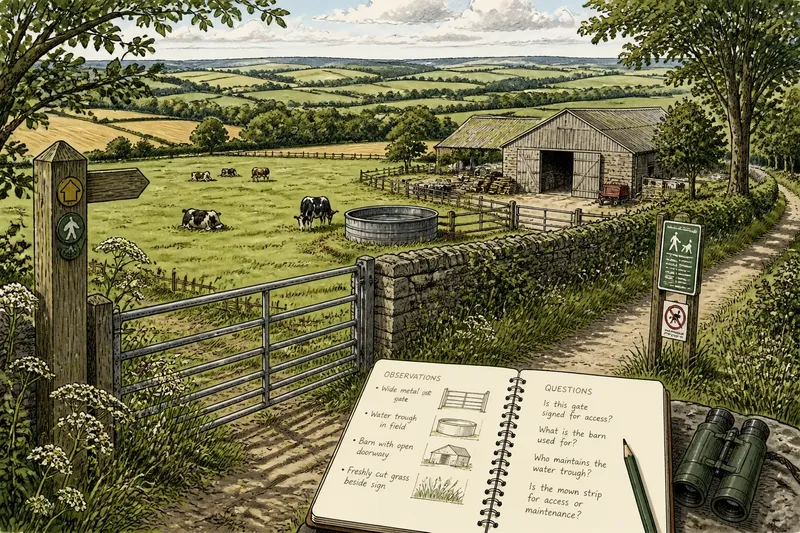
Imagine you are standing on an authorized village path beside a pasture. You see a wide metal gate, a water trough, and a barn with one open doorway; these are invented observations for this example, not claims about a real place.
First, note each feature without assigning a history: the gate is wide, the trough is inside the field, and the barn doorway is open. Next, compare their positions: the gate provides an opening into the pasture, and the trough is set within it. Then check the path signs and stay on the permitted route rather than entering. The resulting account is modest but useful: the field has access points and visible facilities that may support its current use, while the exact activity and the barn’s purpose remain unconfirmed.
Keep the record grounded
A short field note can separate observation from interpretation. Use the left side of a notebook page for visible details and the right side for questions to check later. For example, write “freshly cut grass beside the sign” as an observation and “is this strip maintained for access?” as a question.
- Gate: Check whether it is signed and whether it is on your permitted route; if access is unclear, stay out and consult official local information.
- Building: Check for a sign or visible activity; if its use is uncertain, describe its appearance without naming a purpose.
- Field: Check what is visibly growing or grazing; if the use is not clear, record the visible condition and avoid guessing.
- Maintenance: Check for fresh cutting, repairs, or cleared drains; if the timing or reason is unclear, note the work but do not infer who did it.
- Visitor notice: Check the posted directions; if they restrict access, follow them and choose an open route instead.
- Seasonal clue: Check whether the observation might depend on the season; if it could, treat it as a momentary view and compare later or consult local information.
Reading a countryside landscape this way keeps the focus on evidence you can actually see. The most useful note may be a question left open: it points toward what to check next without turning a plausible story into a fact.